FISHING IN BELIZE
|
Belize is mecca for those interested in fishing. An kinds of fishing spin, fly, trolling - can be experienced all year long, and the abundance of game fish guarantees excellent sport.
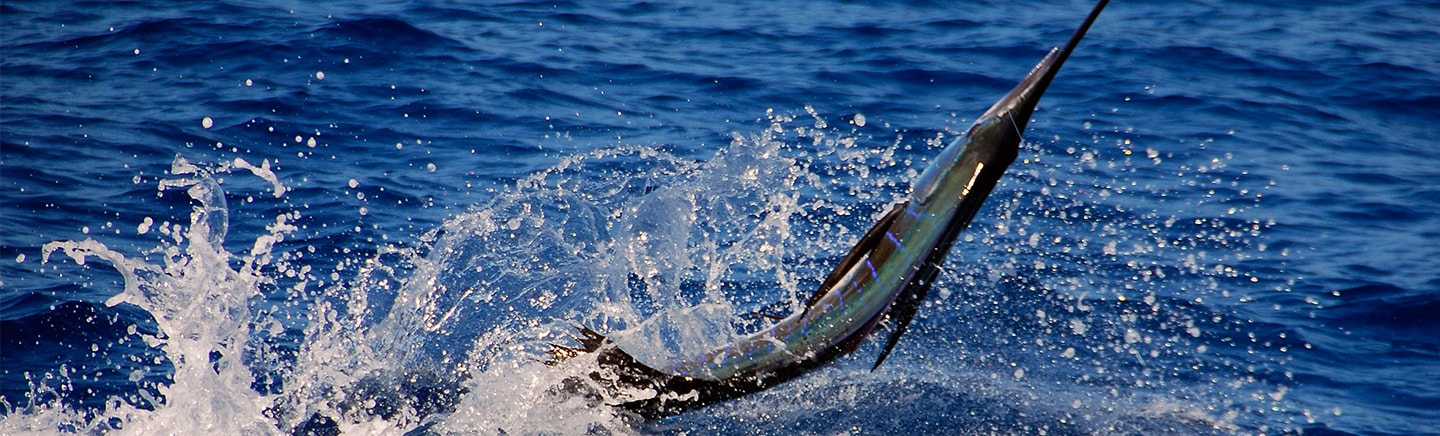
The estuaries, inlets and mouths to the many rivers are known for their tarpon, snook and jacks. The lagoons and grass flats are known for the bonefish, permit and barracuda. The coral reefs support grouper, snapper, jacks and barracuda while the deeper waters off the drop off are home to sailfish, marlin, bonito and pompano. 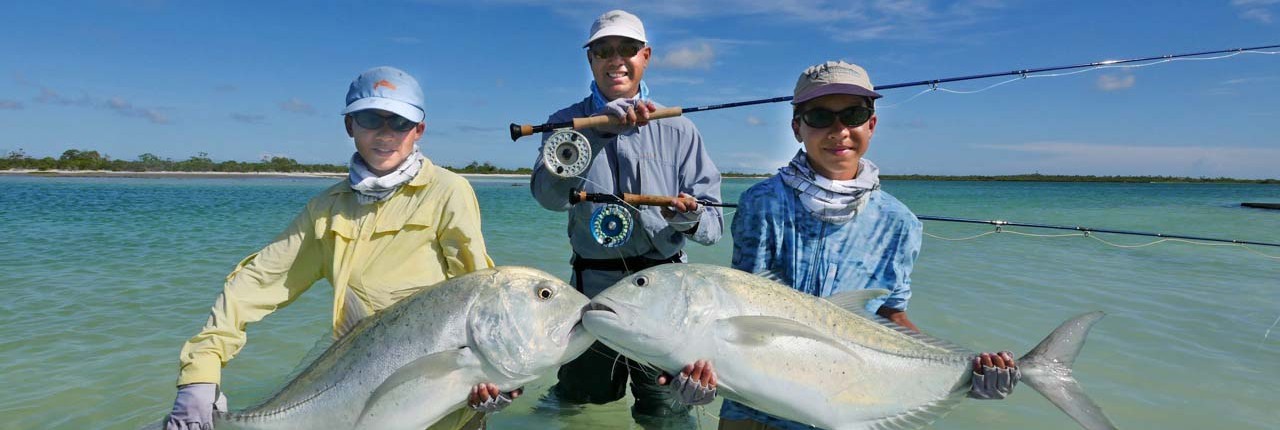
Fishing is great all along the coast of Belize, from the Port Honduras and Punta Icacos lagoon of Toledo to Rocky Point on Ambergris Caye. Any of the many rivers which empty into the Caribbean along Belize's coasts can guarantee a daily catch. Most of your guides and boatmen speak English so learning where and what to fish will be no problem.
The waters surrounding Ambergris Caye abound with a great variety of saltwater fishing and the island boasts some of the best fishing guides in the country. Most types of fish, including bone fish and tarpon, can be caught year-round. Within 15 minutes of leaving the dock, you can be fishing in tidal flats or in blue water hundreds of feet deep. Cost for charters depends on the type of fishing (reef, deep sea, or bone and tarpon), the size of the boat, number of anglers, time of year and current bank balance of the captain, but expect to pay around US$350 per person for a full day's reef and $650 for a deep sea fishing trip, including bait and tackle, beer, soft drinks and lunch. There are several fishing tournaments held each year. Tarpon remain the primary attraction at in the area, although there all the reef species, barracuda, snook, snapper, grouper, and of course the ever-present bonefish and occasional permit. These are really a sidelight, though, because this is tarpon fishing the way everyone dreams that it should be! The flats are situated only a mile or so from the blue water and they are constantly being replenished with fish from the deep. White sand bottoms with occasional patches of turtle grass provide an unbelievable background to make these fish very visible in the shallow water. Schools of dozens of fish can be seen pushing water like bonefish from hundreds of yards distance. The common denominator for success at Ambergris Cay is the weather. Generally speaking, the dry season in Belize extends from March through May. Morning breezes are usually from the southeast during these months and directly from the east during the rest of the year. Since the vast tarpon flats that the fly fishermen are concerned with lie on the western shores of the Yucatan, this affords a protected "leeward" side much of the time. Although the months of May through November are considered the prime time for flats fishing, the fish are present during the entire year and any days that are calm are considered ideal times to be on the water in search for tarpon. When the wind does raise havoc with the tarpon fishing the protected and always sheltered coves and lagoons offer a safe and almost guaranteed shot at bonefish. Though the bonefish don't often run large here, there are lots of them and they provide plenty of entertainment. Permit are frequently spotted in these lagoons also, as well as cruising along the inside coast of the Yucatan and on the tarpon flats themselves. It is a good idea for flyrodders to have a spare rod always set up with their favorite permit pattern and an intermediate line in case they get a shot at one of fly fishing's most elusive gamefish! Barracuda are a common sight in all the water surrounding Ambergris Caye. They are difficult, but not impossible to take on a fly. Six or seven-inch long fish-hair flies with trailer hooks cast across and stripped back as rapidly as possible in front of the fish is the most successful way to latch on to these toothy monsters. For the spin fisherman armed with a fluorescent yellow tube lure, a strike and battle are guaranteed. 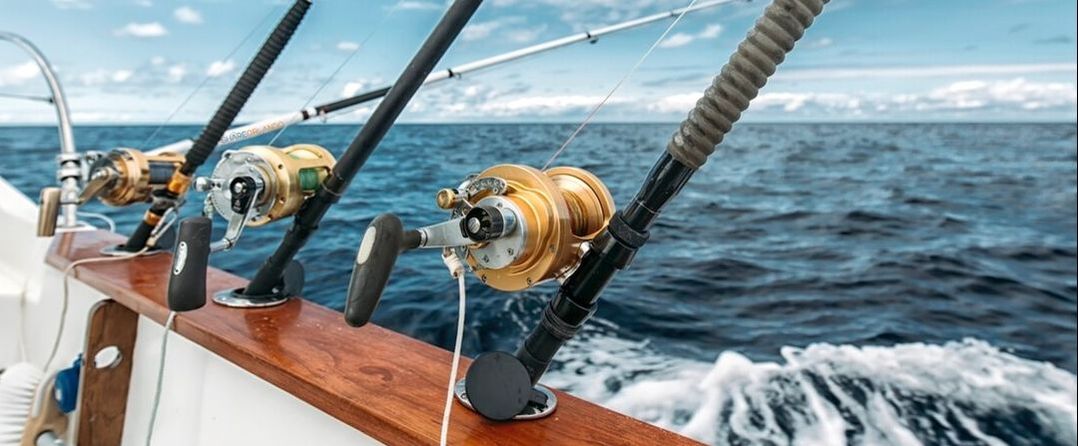
FISHING OFF AMBERGRIS CAYE & CAYE CAULKER
Has remained one of the Caribbeans best-kept secrets until recently. The extensive flats, a twenty minute boat ride from the lodge, are picture perfect. Shallow (2-6 feet) and with a whiter than normal sand bottom, these tarpon feeding grounds stretch for over fifty miles and provide the dining room for almost unbelievable numbers of tarpon. Peak periods on the local flats are the months of May through November, though there are fish around 355 days a year, and Winter/Spring months (February, March and April) provide excellent opportunities when the weather cooperates. More importantly, it is uncommon to encounter other anglers once you have left the harbor area. The immense size of these flats, and the lack of fishing pressure has left these tarpon with an very aggressive nature, and they move readily to almost any properly presented fly. 
FISHING OFF SOUTHERN BELIZE
The waters off the coast of Stann Creek & Toledo are is a Mecca for those interested in fishing. All kinds of fishing - spin, fly, trolling - can be experienced all year long, and the abundance of game fish guarantees excellent sport. Trophy size bonefish, tarpon, permit, are plentiful in Southern Belizean waters, and Grand Slams, while not common, are not unheard of either. The Port Honduras Marine Reserve, with its mangrove coast, clear rivers, hundreds of protective cayes, and the Barrier Reef, forms one of the most important fish nurseries in the Caribbean. The estuaries and inlets of Punta Ycacos Lagoon and the mouths of the many rivers in Southern Belize are known for their tarpon, snook and jacks. Monkey River is popular for flyfishing where bone fish, tarpon and permit are abundant. Punta Ycacos Lagoon and Puinta Negra Lake with their gras flats are known for the bonefish, permit tarpon and barracuda. Further out along the barrier reef and near the coral sand islands, grouper, snapper, jacks and barracuda are caught. For big game such as sailfish, marlin, bonito and pompano, you will have to venture into the deeper waters off the drop off, east of the barrier reef past the Sapodilla Cayes. Peak fishing seasons vary, but you can catch all game fish year around depending on local weather conditions. Generally tarpon are most plentiful from October through mid December and in June and July. Bonefishing is best from September through January. Permit fishing peaks from August through October and March through June. Grand Slams seem to appear most frequently during the months of May and June. Experienced and trained tour guides (all fished for a living in their previous life) take guests out to their favorite fishing areas, where they all but guarantee landing prized sportfish. Cost for fishing charters depends on the type of fishing, the size of the boat, number of anglers, and time of year. Fish are caught on a catch and release basis. Serious fishermen should bring both fly and spin tackle, and any additional equipment. Check HERE for a listing of fishing guides |


|
FISHING CALENDAR - When Is The Best Time To Fish?
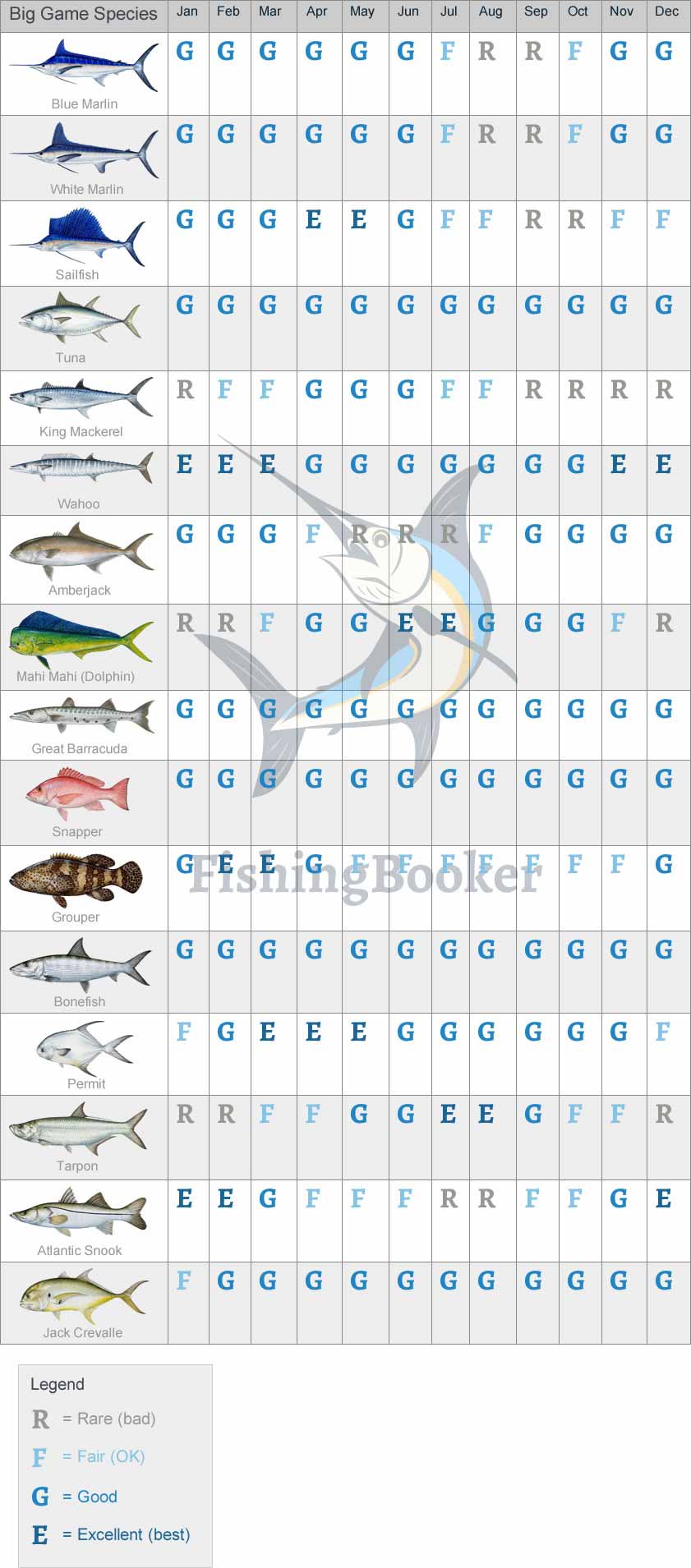
Belize fishing averages good to great. Here are the best months by species we target. We are a neo-tropical climate, our temperature varies less than 10 degrees F year round. So rather than seasons, we have micro climate changes, where we are subject to the occasional cold front in the winter months. Wind is part of our tropical environment; some days are windy, some are not. We are semi-arid and get less than 25 inches of rain annually.
Our fish reside here 12 months of the year, plus the addition of a major tarpon migration in late summer. Any day of the year you can be assured that the fishery is diverse and abundant. Months tend to blend into one another. If our "best" month is a 10, then our "worst" month is an 8 1/2 or a 9. Again, it's the vagary of a passing front that has more impact than the time of year. These fronts possess two common characteristics: they are unpredictable and they tend to be short-lived. So practice your casting and come visit us and one of the world's premier saltwater destinations.
Our fish reside here 12 months of the year, plus the addition of a major tarpon migration in late summer. Any day of the year you can be assured that the fishery is diverse and abundant. Months tend to blend into one another. If our "best" month is a 10, then our "worst" month is an 8 1/2 or a 9. Again, it's the vagary of a passing front that has more impact than the time of year. These fronts possess two common characteristics: they are unpredictable and they tend to be short-lived. So practice your casting and come visit us and one of the world's premier saltwater destinations.
What Time of Year is Best?
Belize has many secrets, not the least of which is this: there are fish in Belize. Fish so big and so plentiful that even the most amateur angler can catch his limit in a few hours. Fish so anxious to impale themselves on a hook that they will rush toward a skiff, or toward a pair of human legs wading in the flats (so it seems).
Belize owes its fishing phenomenon to a remarkably diverse underwater world - its boasts one of the hemisphere's most healthy reef systems due to protected areas by the government as National Parks. Whether you fish in one of the many inland rivers or on the mangrove flats, along the barrier reef or out in deep blue water, it is likely you will not see another angler all day. Of course, as more people "discover" these wonders, the solitude and diversity will diminish (but in the meantime), if you love to fish, don't miss the chance to cast your line in Belize.
Belize has many secrets, not the least of which is this: there are fish in Belize. Fish so big and so plentiful that even the most amateur angler can catch his limit in a few hours. Fish so anxious to impale themselves on a hook that they will rush toward a skiff, or toward a pair of human legs wading in the flats (so it seems).
Belize owes its fishing phenomenon to a remarkably diverse underwater world - its boasts one of the hemisphere's most healthy reef systems due to protected areas by the government as National Parks. Whether you fish in one of the many inland rivers or on the mangrove flats, along the barrier reef or out in deep blue water, it is likely you will not see another angler all day. Of course, as more people "discover" these wonders, the solitude and diversity will diminish (but in the meantime), if you love to fish, don't miss the chance to cast your line in Belize.
AVERAGE WATER TEMPERATURES
JAN | FEB | MAR | APR | MAY | JUN | JUL | AUG | SEP | OCT | NOV | DEC
80 | 79 | 80 | 82 | 83 | 83 | 83 | 84 | 84 | 84 | 81 | 80
JAN | FEB | MAR | APR | MAY | JUN | JUL | AUG | SEP | OCT | NOV | DEC
80 | 79 | 80 | 82 | 83 | 83 | 83 | 84 | 84 | 84 | 81 | 80
Fishing Licenses for Belize
If you’re going fishing, you need a license. Even if you’re going to be in a boat with someone who is fishing, but you’re not fishing yourself, you still need a license. Even if you’ll be fishing from shore, you need a license. You need a license to catch a fish. Period. The law is supposed to be in the process of being re-written to eliminate from the licensing requirements fishing from shore, children under a certain age or senior citizens over a certain age, and the requirement that everybody in a boat on which fishing gear is located needs a license. (Right now, the way the law is written if 6 snorkelers go out on a boat and the guide brings along fishing gear to catch fish for lunch, all 6 snorkelers should have a fishing license.) Even if they eliminate some silly things in the law, you’ll still always need a license for sportfishing, particularly for catch and release. |
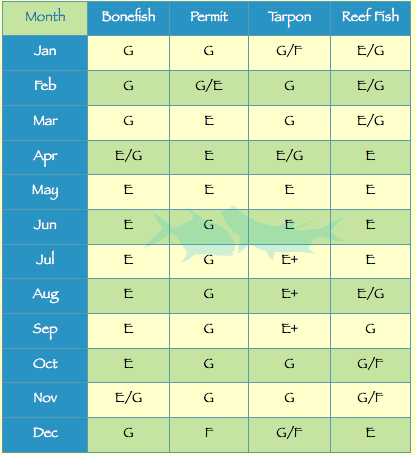
January - On calm days you should see as many as 50-75 tarpon, 20-90 pound range. Generally bone and tarpon fishing are good; reef fishing good to excellent on calm days.
February - Fish are plentiful on the flats if the wind isn't too strong. Tarpon in the 20-90 pound range. Bones, Permit and tarpon fishing are good, but weather-dependent. Reef fishing is excellent. March - Plenty of 20-90 pound tarpon on the calmer days. Plenty of bonefish. Tarpon in lagoons. Reef fishing good to excellent. Permit schooled up in good numbers. April - Lots of tarpon, 40-100 pounds, and they are more aggressive. Migrating tarpon start coming onto the reef. It's a good month for permit too. Usually large schools of small permit, and plenty of bones. Reef fishing excellent. May - Generally our hottest month, with calm-to-light breezes. It's not uncommon to see huge schools of 200-300 bones. Tarpon on both flats and the reef. Reef fishing is good to excellent. June - Bone fishing is excellent as it always is from April through October. Tarpon on both the flats and reef. Reef fishing good to excellent. July, August, and September - Usually calm and warm. Great fishing. Lots of bones, lots of tarpon to well over 100 pounds. We consider this the best tarpon season of the year. The most and the largest tarpon have been caught in August and September. We also find some of the largest permit of the year during tarpon migration. October - Lots of tarpon, large and aggressive. Bones are larger and more aggressive too. Big schools of jack crevelle are also on the flats now and it is a good month for the larger permit. Reef fishing fair to good. If there is a lot of rainfall on the mainland, snook arrive on the flats in large numbers. The lodge record for the most tarpon landed in a single day was had in October by Dick Smith with 7 tarpon landed and another 5 jumped. November - There are plenty of 60-100 pound tarpon on the flats. Jack crevelle and bone fishing are also good. Reef fishing good to excellent. December - If the sun stays out there are plenty of barracuda, bones, and tarpon (40-80 pounds) on the flats. Jacks and ladyfish too. Full moon brings grouper and snappers to the reef to spawn. Reef fishing good to excellent. |
What kind of fish can I expect to catch?
That's the question everyone asked, when they get on the boat (so let's discuss the answer). Belize has some of the best sport fishing around, and most of it can be enjoyed all year long. Some anglers tell us, it is virtually impossible to go fishing in Belize and not catch something. A distinct advantage you have here, is most all the tour operators speak English.
ESTUARIES & MOUTHS OF JUNGLE RIVERS
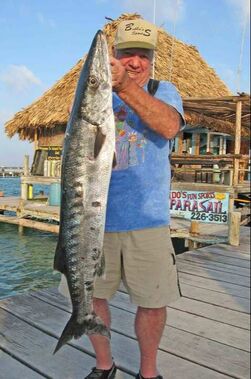
Are the best known places for their tarpon, black snapper, jack-revalle, cubera, and snook; lagoons and coral flats for their bonefish, permit, triggerfish, and barracuda.
REEF FORMATION
Are best known for thier king macherel, kingfish, jackfish, grouper, barracuda, and snapper.
DEEPER WATERS OFF THE OUTER REEFS & ATOLLS
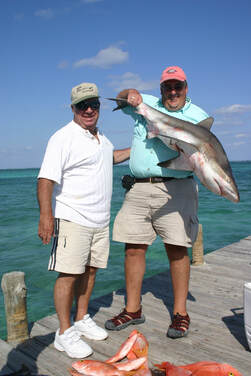
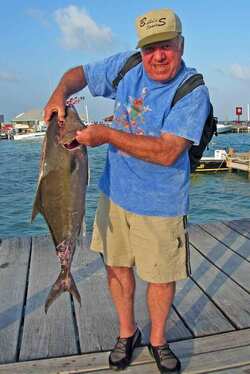
Are best known for their amberjack, sailfish, shark, wahoo, pompano, blackfin tuna, yellowfin tuna, bonito, dolphinfish, mahi-mahi, and marlin. Species availability varies considerably, depending on the depth and clarity of water, proximity to reefs and rivers, and time of year.
ESTUARIES & MOUTHS OF JUNGLE RIVERS
Are the best known places for their tarpon, black snapper, jack-revalle, cubera, and snook; lagoons and coral flats for their bonefish, permit, triggerfish, and barracuda.
REEF FORMATION
Are best known for thier king macherel, kingfish, jackfish, grouper, barracuda, and snapper.
DEEPER WATERS OFF THE OUTER REEFS & ATOLLS
Are best known for their amberjack, sailfish, shark, wahoo, pompano, blackfin tuna, yellowfin tuna, bonito, dolphinfish, mahi-mahi, and marlin. Species availability varies considerably, depending on the depth and clarity of water, proximity to reefs and rivers, and time of year.
|
|
|
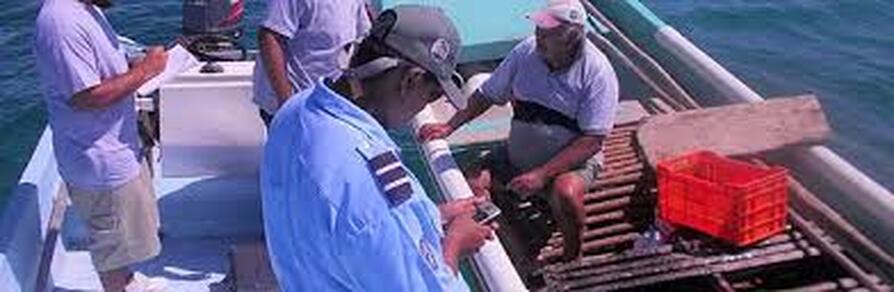
Belize Fishing Regulations
You can make a difference. Supply and Demand. If the consumer knows the proper seasons for seafood in Belize they are better equipped to make decisions at the restaurant or on their fishing trip. BY ensuring your local guides and restaurants comply with Belize’s Fishery Laws you are helping to protect commercial seafood species for generations to come. While we are making strides in mariculture options they can never replace natural stocks which still need more protection now and forever. Special Laws and Permits – All fishermen must have a valid license. You must be a Belizean Citizen or permanent resident in order to obtain a fisheries permit. Sea Cucumber requires a special permit. Fish Fillet must have skin patch left on 2 inch by 1 inch. No fishing while using artificial breathing devices (scuba gear or hookah) In Marine Protected areas several restrictions on fishing gear apply: no nets, no longlines, no traps. Complete Ban
Coral – All Parrotfish, Blue Tang, Surgeon Fish, Permit, Tarpon, Bone Fish, Marine Turtle (all species), Whale Shark, All Marine Mamals Closed Seasons Conch - July 1st to Sept 30th Lobster - February 15th to June 14th Nassau Grouper – December 1st to March 31 Wild Shrimp - July 14 to March 14 (trawler sources; farm shrimp is legal all year around) Hickatee - May 1st to May 31st Catch & size limits Conch Shell Length > 7 inches Market Clean > 2.5oz. Lobster Cape Length > 3 inches Tail Weight 2.75 oz. Nassau Grouper Must be 20 – 30 inches only Must be landed whole (no fillet) |
FISHING REGULATIONS
BONE FISHING
Also known locally as macabi. No person shall buy or sell any bone fish. CONCH Shell length should exceed seven inches, and market clean weight should exceed three ounces, no diced or fillet. The season is closed July 1 to September 30th. HICKATEE No person shall have in his possession more than three, or transport on any vehicle more than five such turtles, or fish for female hickatee that are greater than 43 centimeters (17.2 inches) or smaller than 38 centimeters (15.2 inches). The season is closed May 1-31st. LOBSTER Minimum cape length is three inches, minimum tail weight is four ounces; no diced or fillet. The season is closed February 15th to June 14th. MARINE TURTLES No person should interfere with any turtle nest. No person may take any turtle unless with a license from the Fisheries Administrator (traditional use only). No person shall buy, sell, or have in his possession any articles made of turtle shell. NASSAU GROUPER No person shall take in the waters of Belize, or buy, sell, or have in his possession, any Nassau Grouper between December 1 and March 31, except from Maugre Caye at Turneffe Islands and Norhthern Two Caye at Lighthouse Reef. At these two places a special license is granted to traditional fishers. SHRIMP Trawling: the season is closed April 15th to August 14th. No one should fish using scuba gear except under license from the Fisheries Administrator. 
|
Why Is Catch & Release Important For The Environment?
|
Catch and release is not nonsense, it’s essential to protect a very lucrative sport fishing industry that provides a very good living to many Belizeans – and not just guides, but also people in the hotel, restaurant, transportation, agriculture, communications and other industries.
Nor are fishing licenses or the rewriting of the Fisheries Act nonsense. Our fisheries are being seriously depleted and we have to do something about that or we won’t have any fish – just like Jamaica and Japan, and much of the rest of the world. Our Fisheries Act was originally written in 1948, with one minor revision in 1989. It doesn’t address the many complex issues that have arisen in the last 63 years, which, if not addressed, will leave us unable to protect our fisheries. Some of those issues are international ones, such as restrictions on fishing in our economic zone, which stretches 200 miles beyond the Reef, and which is being eyed by many countries as a potential source of food for them, not us. Other issues include straddling stocks (relevant in the Belize/Honduras/Guatemala area), harvesting of marine resources such as sea slugs/cucumbers (which was certainly never thought of 1948), protection of mangroves, seagrass and other marine habitat, etc. Some people in Belize still have a romantic image of the caye boys in their dories fishing for food for their families and making a little extra money for clothing, housing and education. That was great when life was much simpler and fish were much more plentiful. (I’ve seen a HUGE drop in fish size and quantity in just the 13 years I’ve been here.) That romantic image is great if we honor it, but don’t try to still live by it. Because if we do, it won’t be an image much longer, it – and us – and the Sea – will be ghosts. |
|