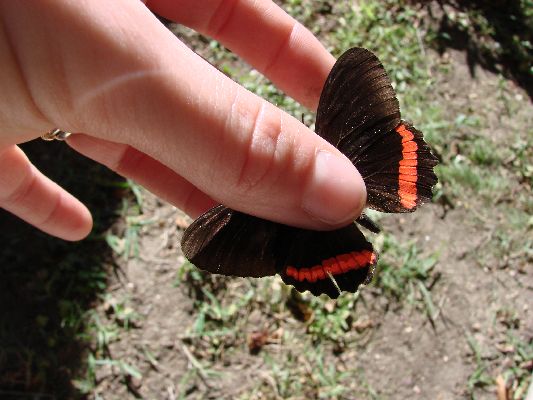
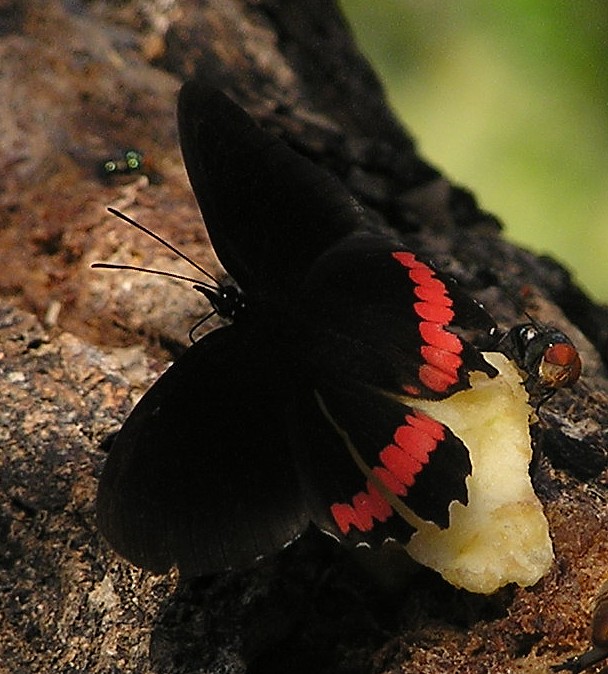
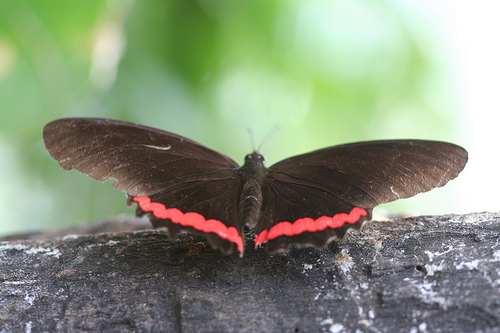
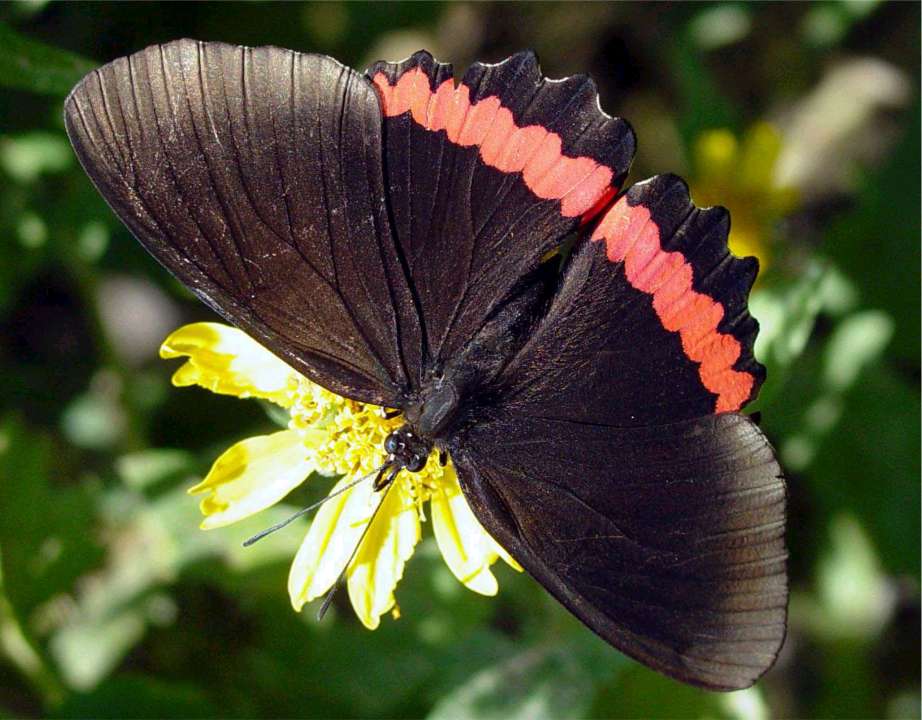
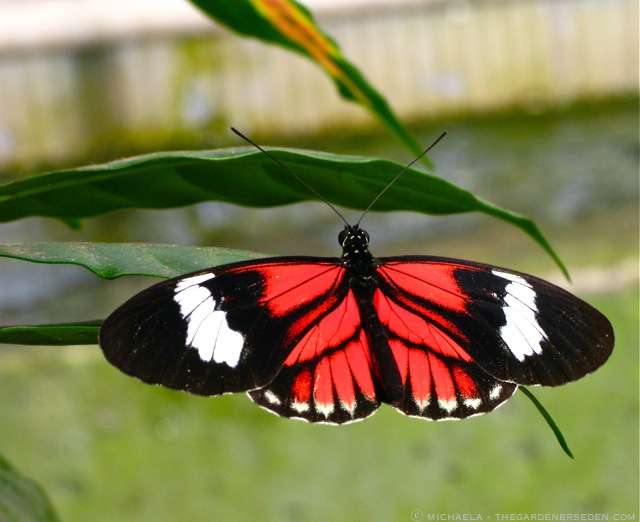
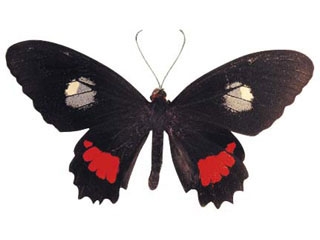
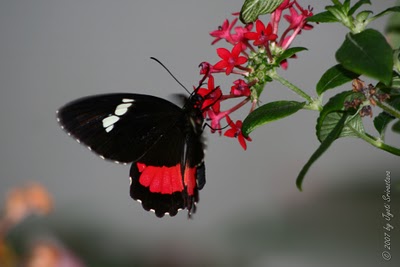
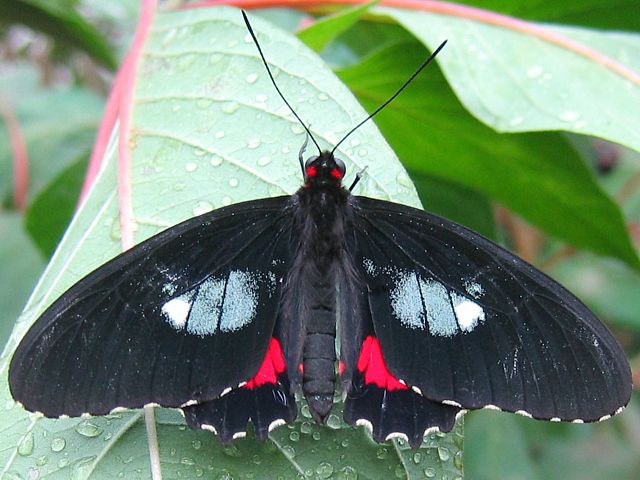
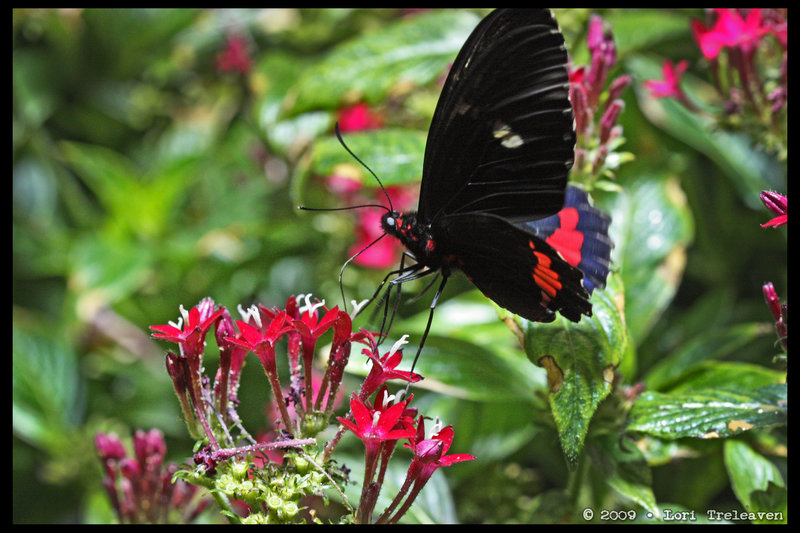
 LAUREN'S BUTTERFLIES OF BELIZE (Part Seven) Is brought to you by ReMax Isla Bonita - everything we touch, turns to sold! 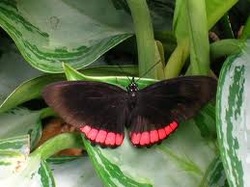 BELIZE RED RIM BUTTERFLIES The Red Rim or Crimson Banded Black Butterfly is a species can be found in Central American, sometimes as far north as Texas. They can be seen flying between March and November in subtropical forests of Belize. Adults are hard to miss identify with their bright red patches. The caterpillars of this species are gray-brown with raised green marks and spikes.They have a velvety black forewing with a grey hindwing. The hindwing has a pinkish-red band (as you see in the picture to the left). Red Rim Butterflies like shady roadsides and humid thorn-scrub forests, where it can be found cruising lazily among the shadows. For this reason, the rainforests of Central America are a favorite habitat for this butterfly. Common throughout this region, Red Rim Butterflies often strays over into Mexican and the southern part of Texas, but it seems to have been unable to establish a breeding population there. It's host plant is the Pine Nettle. Here the Red Rim Butterflies lays its off-white, grooved eggs that are protected by long hairs. Caterpillars are spiny, colored a gray-brown with green looking warts. They are thickened in the middle with a light-colored band on the seventh segment and a head armed with horns. The adults are attracted to rotting fruit and feed on the fermenting juices.
1 Comment
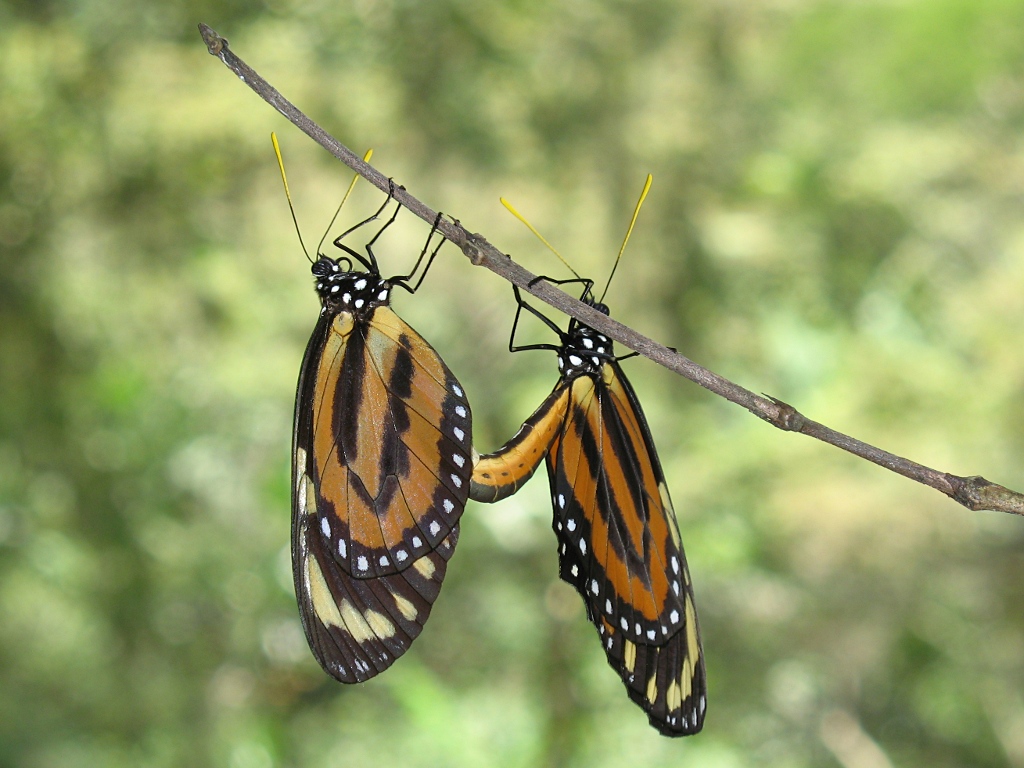
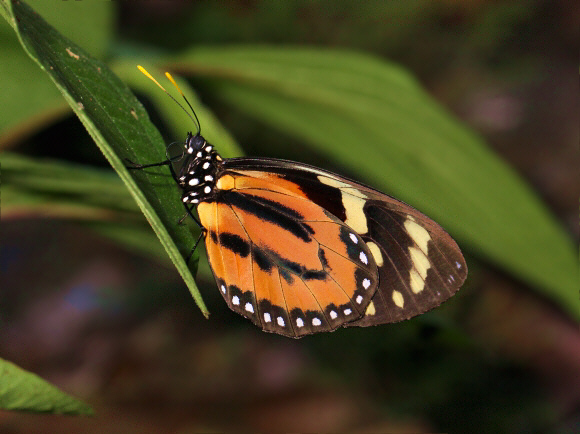
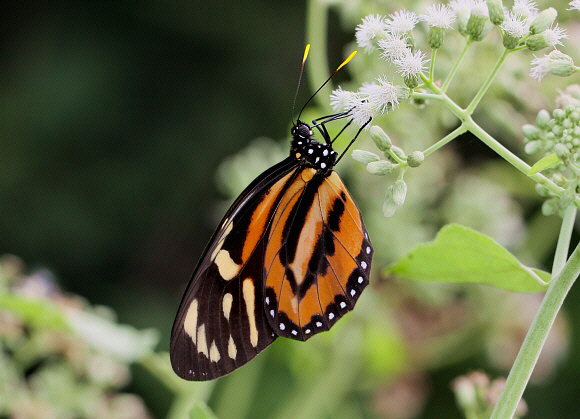
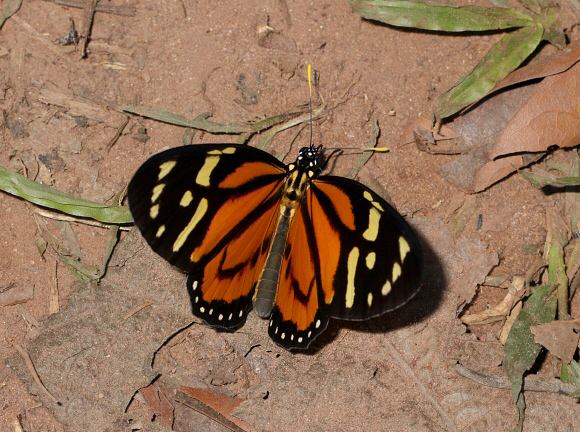
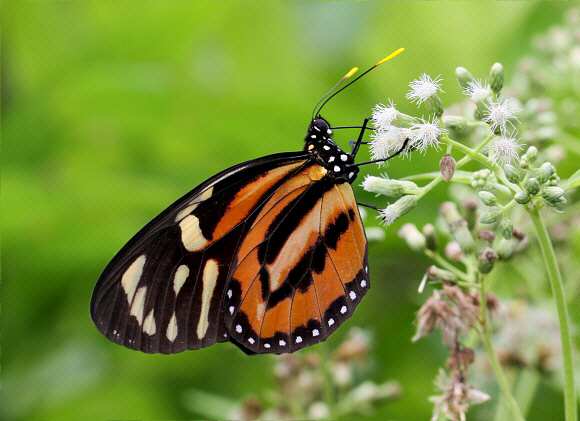
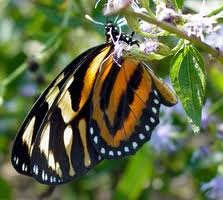
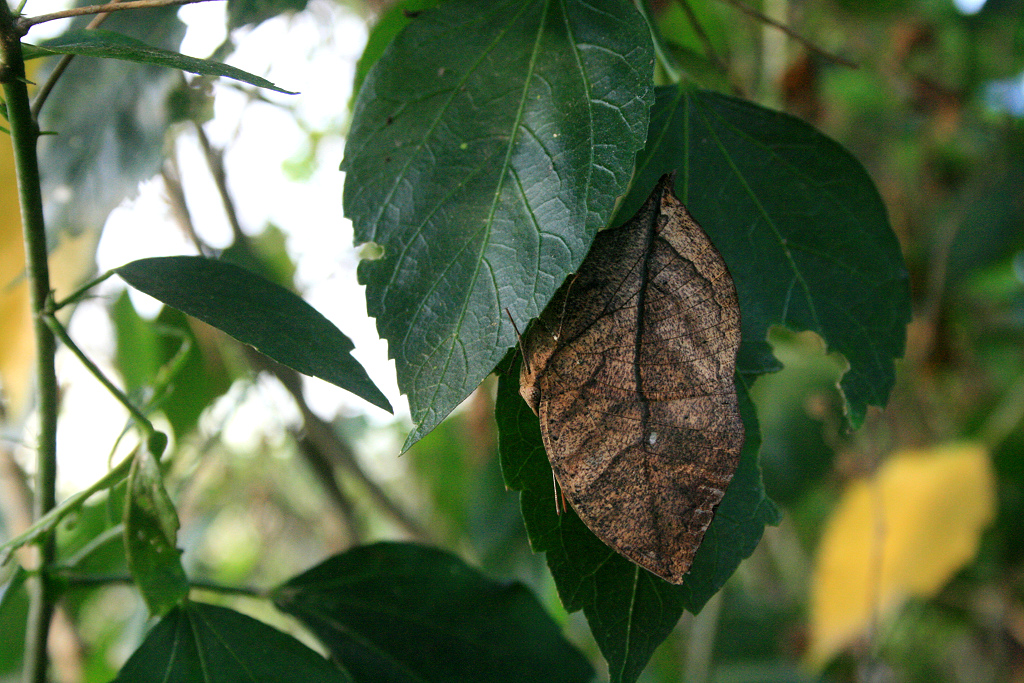
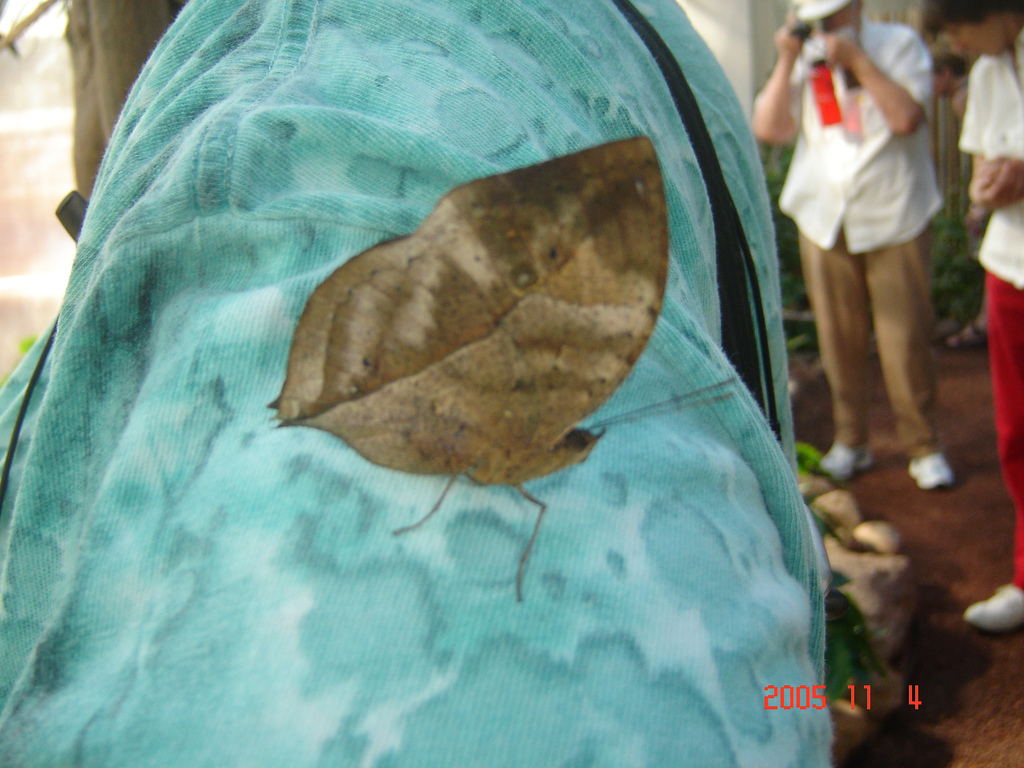
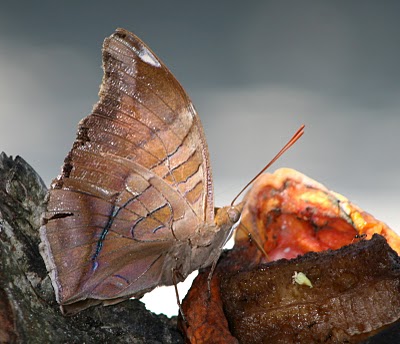
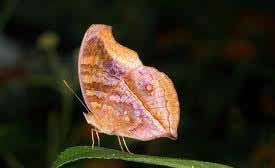
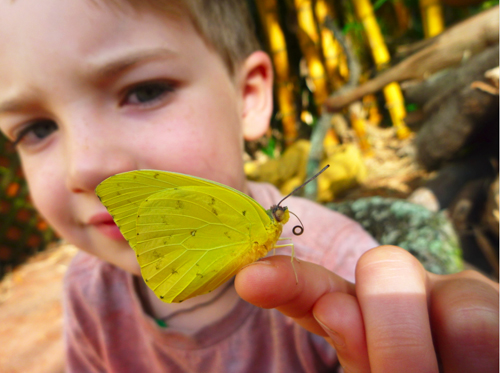
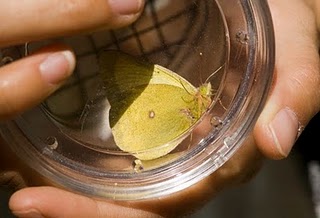
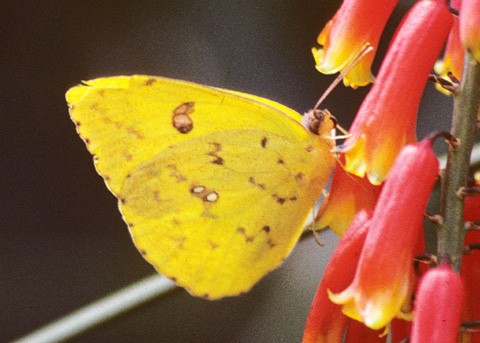
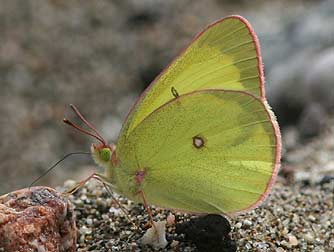
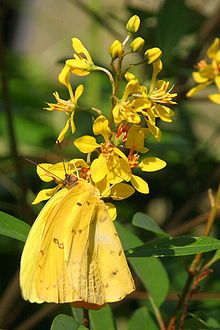
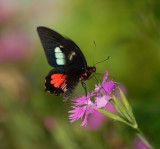
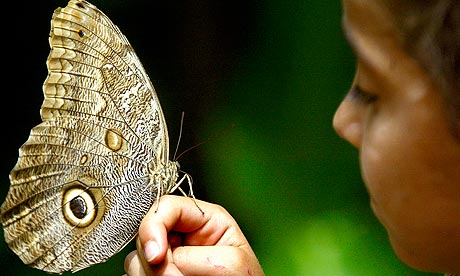
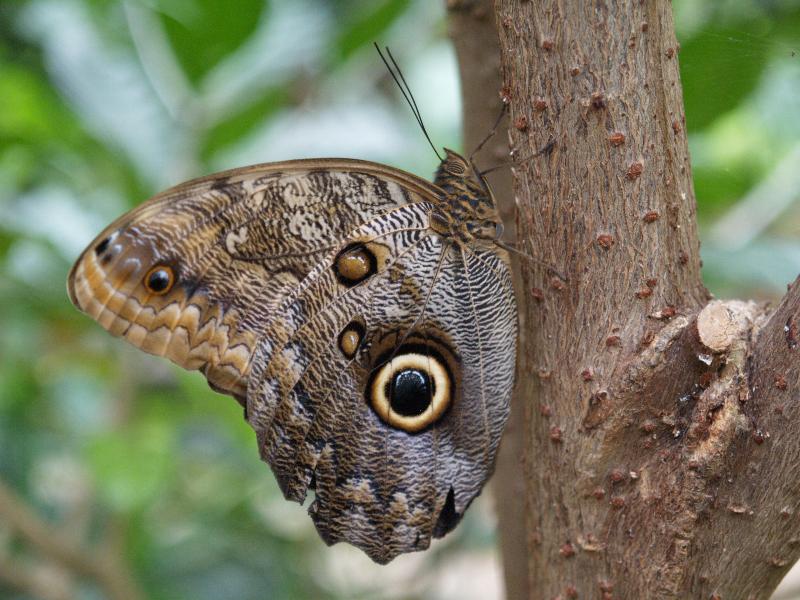
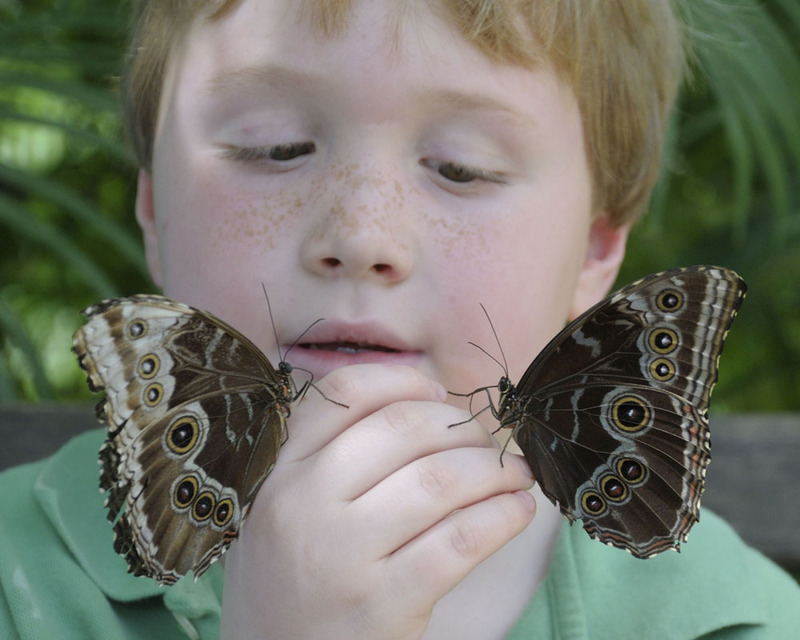
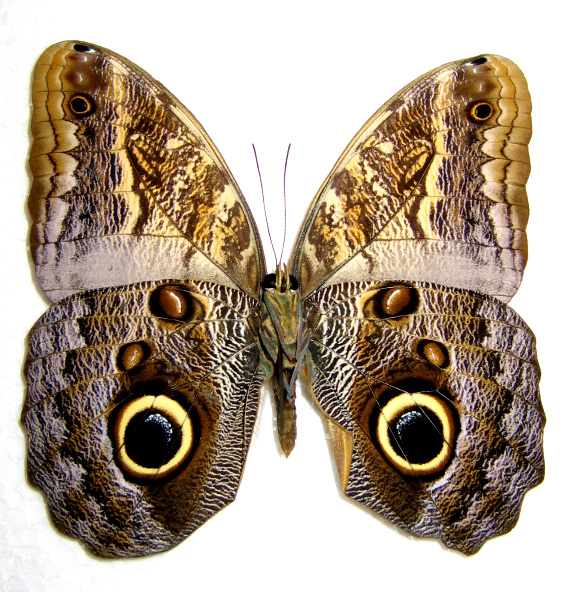
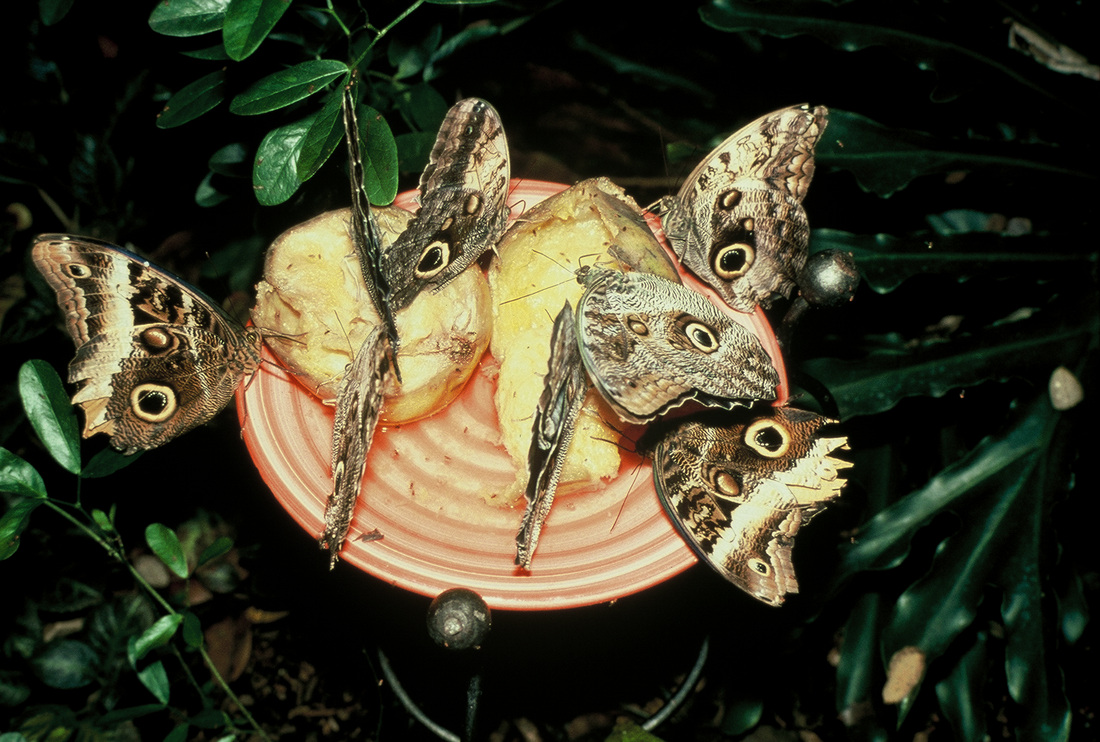
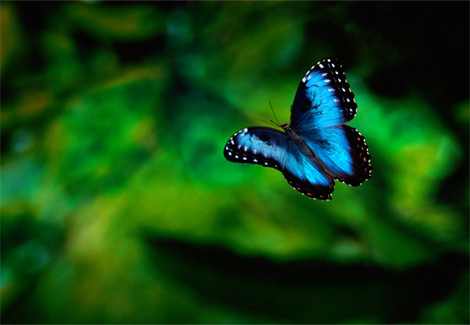
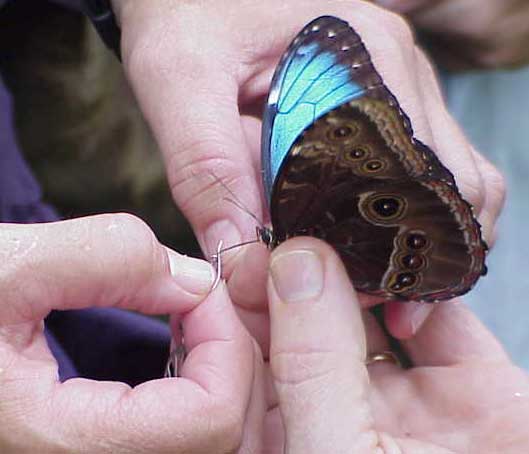
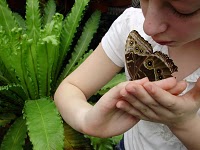
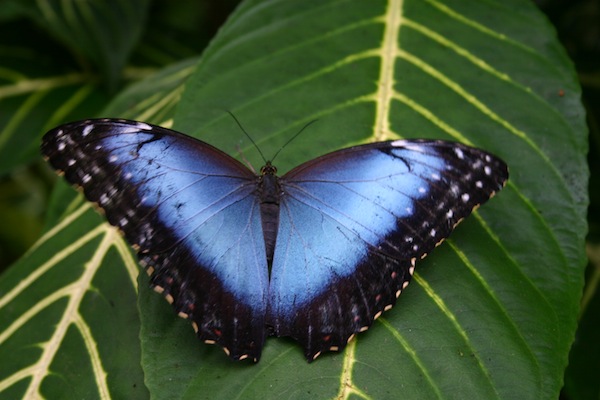
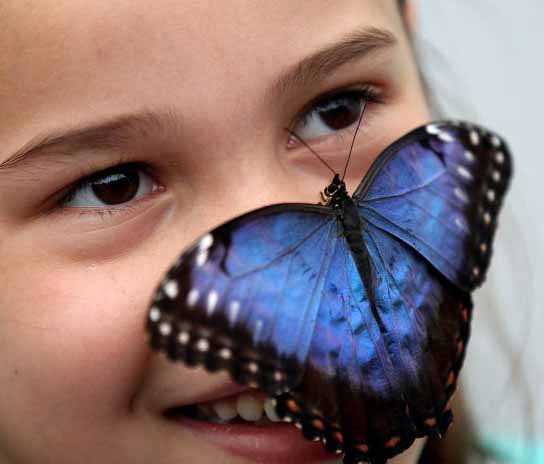
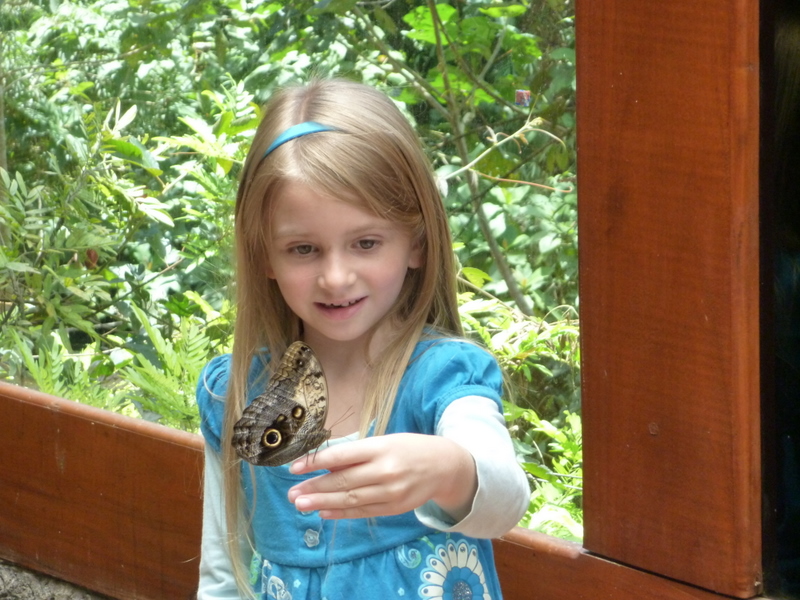
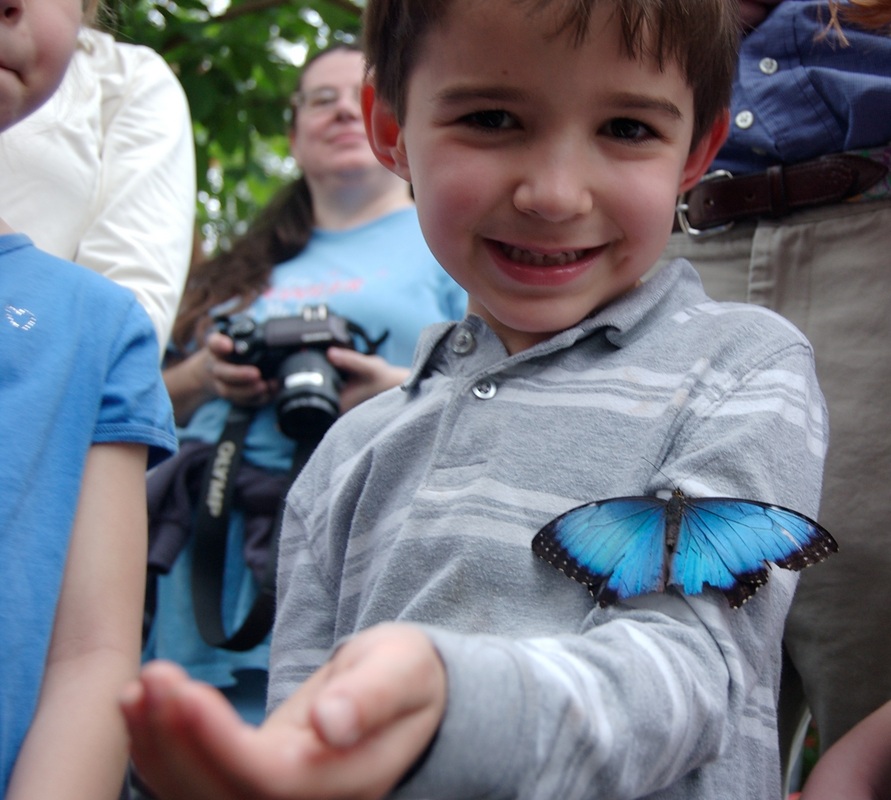
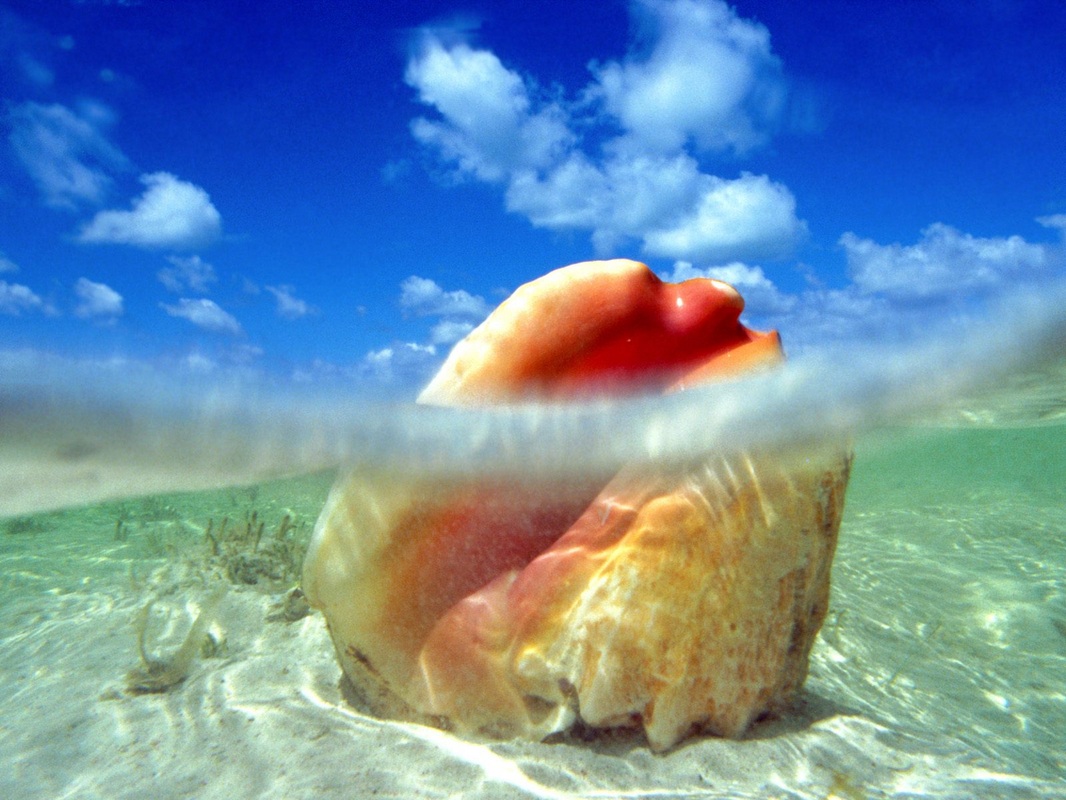
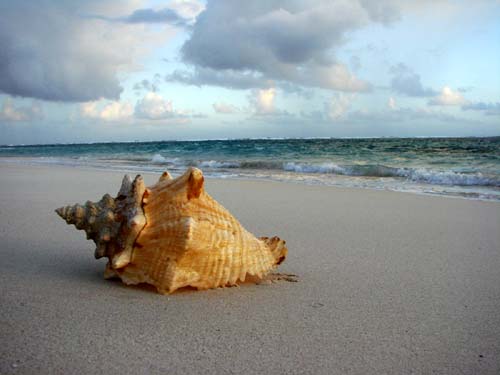
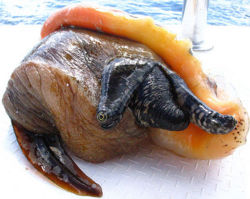
 LAUREN'S BUTTERFLIES OF BELIZE (Part Six) Is brought to you by ReMax Isla Bonita - everything we touch, turns to sold! 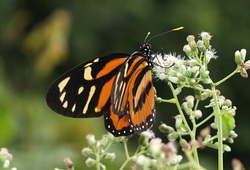 There are nine recognized subspecies of the tiger mimic butterfly. However, no matter what its wing pattern, coloration, or sex, a tiger mimic butterfly can be identified by a characteristic round spot on the upper side of its forewings (as seen in the picture tot he left). The tiger mimic is the most widespread and abundant butterfly species in Costa Rica (a neighboring country to Belize), where it can be observed flying on a regular basis in every city. It is considered a weak flier, therefore it tends to frequent wind-sheltered areas. The tiger mimic, which is sometimes called the sweet oil butterfly, is unpalatable and extremely toxic to vertebrate predators. During the larval stage, tiger mimics feed in groups on the leaves of nightshades (such as the potato, eggplant and other common nightshades), which are known for their toxic compounds. The larvae ingest and sequester the compounds that then serve as a defensive mechanism against vertebrate predators. However, predators such as the parasitic wasps, flies, or spiders, and predatory ants, are not detered by their toxic nature. With these toxic compounds, the Tiger mimic caterpillars demonstrate a sort of chemical camouflage that serves as a protection for them from other insects. Since the caterpillars are able to sequester lipids from nightshade leaves into their cuticles, the larvae become chemically indistinguishable from their hosts and the ants do not recognize them as prey. The tiger mimic butterfly and other representatives of the tiger-striped mimicry rings are popular with butterfly enthusiasts, because of their clear defensive strategy against predatory birds and lizards. Moreover, the slow wing beat of adult tiger mimics makes them easy to view and photograph and, therefore, the species is a favorite at butterfly gardens and conservatories. Unlike many Neotropical butterflies, which are at risk of extinction, the tiger mimic appears to not only be surviving, but also thriving.  LAUREN'S BUTTERFLIES OF BELIZE (Part Five) Is brought to you by ReMax Isla Bonita - everything we touch, turns to sold! 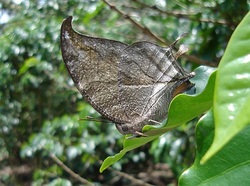 TROPICAL LEAFWING BUTTERFLIES Tropical leafwing butterflies are abundant in Belize. They vary extremely in their wing and body coloration. Males leafwing's vary like the color of leaves during the dry season, from bright red to pale yellow. Females leafwing's feature a conspicuous tan area on their forewings, which resembles a dried brown skeleton of a leaf, and have a more pointed abdomen. As members of the of the brush-footed butterfly family (Nymphalidae), tropical leafwing butterflies exhibit a highly modified front pair of legs that are extremely hairy and are not used for walking. The behavior of a tropical leafwing butterfly depends upon its environment and situation. Generally, the adults are strong fliers with powerful wings. However, male butterflies prefer to sit and wait on perches, rather than roam, when looking for suitable mates in order to conserve energy. If disturbed, the tropical leafwings do not hesitate to use their flying power and move on. The butterflies quickly soar into the forest canopy and then fold up their wings in order to blend in with their surroundings, as seen in the picture above. Wild coffee is a favorite food plant of tropical leafwing caterpillars (as the leaves contain phyto-chemicals), which may provide predator defense to the species through chemical sequestering. The larvae are gray-green with many pale, oddly shaped points, the thickest of which is a green-highlighted hump at the rear of the thorax. Mature larvae feature a pair of widely spaced, blunt, peg-like horns on their heads that are splattered with green granules. For added defense, the larvae form chains at the ends of leaves by binding particles of their droppings together with spun silk. The result is a jumble of debris that provides the caterpillars with some protection from predaceous jungle ants. The tropical leafwing butterfly species are popular in butterfly collections prepared for science courses and museums because they illustrate camouflage very well. Although they are considered relatively common in the wild, the status of tropical leafwing butterflies are at risk in the rain forest, due to deforestation. Here in Belize, much of our rain forest is protected, so the leafwing butterfly will be around for a very long time. Next time you are walking through the rain forest in Belize (look closely), and see if you can see a leafwing butterfly. We found this wonderful video of a Butterfly Farm in Belize. We just had to share.  LAUREN'S BUTTERFLIES OF BELIZE (Part Four) Is brought to you by ReMax Isla Bonita - everything we touch, turns to sold! Butterflies from Around the World: http://www.pbase.com/lejun/butterflies_from_around_the_world 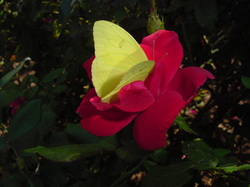 THE CLOUDED SULPHUR BUTTERFLY These are the prettiest little yellow butterflies. They seem so fragile, even just to look at. The Clouded Sulphur is found almost anywhere in Mexico and Belize. Their wings are lemon-yellow with a black border and spot on each forewing. The female can be very pale yellow, making it harder to distinguish her from other types of butterflies. The average wingspan of a Clouded Sulphur butterfly is 2” inches. Their range is from South America to southern Canada. Their habitat is wide open spaces, gardens, glades, seashores, and watercourses. The adult butterfly loves nectar plants from many different flowers, with long tubes including cordia, bougainvillea, cardinal flower, daisys, dandelion, hibiscus, lantana, milkweed and wild morning glories. Their life cycle is dependent on the climate, from mid-summer to fall in the cooler areas, to year round in the warmer tropical climates such as Belize. The Cloudless Sulphur Butterfly starts out as a white egg. Eventually it will turn to a pale orange. The egg stage lasts six days. Then a caterpillar emerges that is yellow to greenish, stripes on its sides, with black pota-dots in a row across its back. The caterpillar will usually grow to a length between 41-45 mm. WE JUST LOVE THESE LITTLE "YELLOW BUTTERFLIES".  LAUREN'S BUTTERFLIES OF BELIZE (Part Three) Is brought to you by ReMax Isla Bonita - everything we touch, turns to sold! Butterflies from Around the World: http://www.pbase.com/lejun/butterflies_from_around_the_world 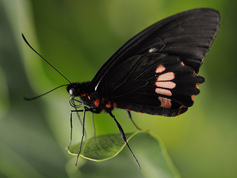 PINK CATTLEHEART BUTTERFLIES - Tropical Rainforests of Central America I like to think of this butterfly as the Belize rainforest butterfly. It was very hard to find alot of information about this butterfly. Their common name comes from the bright red spots on their hind wings. The wing span is approximately 2.8 to 3.3 inches. Both sexes have black wings, with a red spot on the dorsal hind wing. The dorsal fore wing of the male has a triangular green patch, and the dorsal fore wing of the female has a white patch. There seems to be quite a bit of variability in the coloring and markings of this species. Their habitat is commonly the tropical rain forests of Mexico and North South America. Cattleheart caterpillars feed on the poisonous pioevine plant (aristolchia sp.) and these toxins are incorporated into their blood. For this reason, the Cattleheart butterflies are unpalatable to birds. So the next time you are walking through the rainforest in Belize, stop for a moment in the sunshine and see if you can see a Cattleheart Butterfly.  LAUREN'S BUTTERFLIES OF BELIZE (Part Two) Is brought to you by ReMax Isla Bonita - everything we touch, turns to sold! Butterflies from Around the World: http://www.pbase.com/lejun/butterflies_from_around_the_world 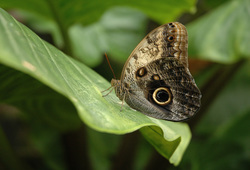 Owl Butterflies are large, tropical butterflies found in secondary forests and rainforests from Mexico down to the Amazon in South America. Owl butterflies are typically active during the daytime, but these specific butterflies are most active around twilight hours each morning. So during the day, you are most likely to see them resting. It is easy to see why they are called Owl Butterflies. Their wings look like the face of an owl, and if you spread the wings out, you can actually see a pair of eyes looking straight at you. Owl Butterflies have a wingspan up to 6 inches. Their dorsal wing surfaces are broadly edged with dark brown, tan to gray on the hind wings. Their ventral wing surfaces (seen when they are resting) are a molting looking brown, with cream at the base of the fore wing. There is one large eye spot on each hind wing. These butterflies like to land on tree trunks, because they blend in and are not very easily seen. Plus, if they hold still, then you actually think they are starring at you, when they really aren't. This is why predators will leave them alone. Like most tropical butterflies, Owl Butterflies feed on the oozing juice from rotting fruit. So if you want to attract butterflies on your porch or in your garden. Leave out pieces of rotten fruit. They love it!  LAUREN'S BUTTERFLIES OF BELIZE (Part One) Is brought to you by ReMax Isla Bonita - everything we touch, turns to sold! 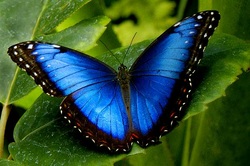 Mom is helping me with this series. I'm picking the butterflies, I want mom to write about. The Blue Morpho is my first choice. I think the Blue Morpho Butterfly is the prettiest butterfly I have ever seen. It has bright blue wings, with black edges and white poka-dots. It is among the largest butterfly family in all the world. It's wings span is between five to eight inches. The underside of the Morpho’s wings, are a dull brown color with many eyespots, which help to camouflage it against predators such as birds and insects when its wings are closed. When the Blue Morpho flies, the contrasting bright blue and dull brown colors flash, making it look like the Morpho is appearing and disappearing. The Blue Morpho Butterfly has two clubbed antennas, two fore wings and two hind wings, six legs and three body segments -- the head, thorax and abdomen. We learned about this in school. Blue Morphos live in the tropical forests of Belize. Adult butterflies spend most of their time on the forest floor and in the lower shrubs and trees of the understory with their wings folded. If you are walking through the rainforest, you will mostly see these butterflies in in clearings, and along streams where their bright blue wings are most visible. The blue Morpho’s entire lifespan lasts only 115 days, which means most of their time is spent eating and making babies. A Blue Morphos diet changes throughout each stage of their life. As a caterpillar it likes to chew leaves, then as it becomes older it no longer chews its food, but drinks it instead. An adult Blue Morphos develops a mouth that looks like a straw and it sucks in fluids, the juice of rotting fruit, fluids of decomposing animals, tree sap, fungi and even wet mud. Blue Morphos has taste sensors (much like taste buds on our tongues) on their legs, and they "taste & smell" the air with their antennae, which serve as a combined tongue and nose. Blue Morphos are severely threatened by deforestation (so don't cut down our trees) in the tropical rain forests. This is one of the reasons why the Belize Government took over 40% of our land and turned it into National Parks and habitats for animals and insects like the Blue Morphos. Always remember when you go into a Belize National Park - look but don't touch! 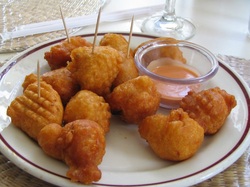 CONCH FRITTERS Contributed by Tony's Inn & Beach Resort, Corozal Town, Belize. Conch Shells wash up on our beaches here in Belize all the time. Inside these conch shells (see the pictures at the bottom of the page) are snails. The locals like to take the snail out and eat them. Conch can be fixed in a number of ways. One way is to make them into conch fritters, which are really good. If you don't find them washed up on beaches, you can dive for them in shallow water off shore. So, as any culture would do, the locals have found ways, to take the meat from these snails and make them into a variety of tasty dishes. When you find a conch shell, there is a procedure to follow as to how to take the snail out. Then the fisherman clean and sell the snails to restaurants and grocery stores. They give the shells to local street vendors, who scrub, clean and polish them to sell to tourists. Like the picture you see below to the far right. I love conch fritters and wanted to share this recipe mom got from Tony's Inn and Beach Resort in Corozal Town. If you contact Tony's Inn & Beach Resort, tell them "Our Belize Vacation" sent you. CONCH FRITTERS PICO de GALLO 1 lb. conch Combine diced tomatoes, onions, cilantro, salt & pepper to taste. 1/2 sweet pepper, minced Add lime juice and a dash of olive oil. 1/2 habanero pepper (no seeds) 1/2 tomato, diced finely 1/4 onion, minced juice of 1 lime sprig cilantro dash salt and pepper 2 c. flour 2 tsp. baking powder 1 c. water 1/3 c. vegetable oil INSTRUCTIONS FOR MAKING CONCH FRITTERS - Clean and dice conch and place in a food processor with vegetables and lime juice. Pulse until fine and well mixed together. If no food processor is available, beat conch to tenderize, and then mince. Add to minced vegetables with salt and pepper to taste, mixing well. Combine dry ingredients together and add processed conch and vegetables. Mix well, adding water to moisten. Drop by tablespoonful into hot oil and cook until golden. Remove from oil and drain on paper towel. Makes 8 fritters. Here I am, with the ocean to my back. One of my favorite things to do here, is play in the pool with all my friends. Today we are having a pool party at my house. Daddy and uncle Dennis, grilled up some hot dogs-hamburgers, and a whole bunch of kids came over. We had a great time playing in the pool together. Thought you might enjoy seeing pictures of me swimming with all my friends.         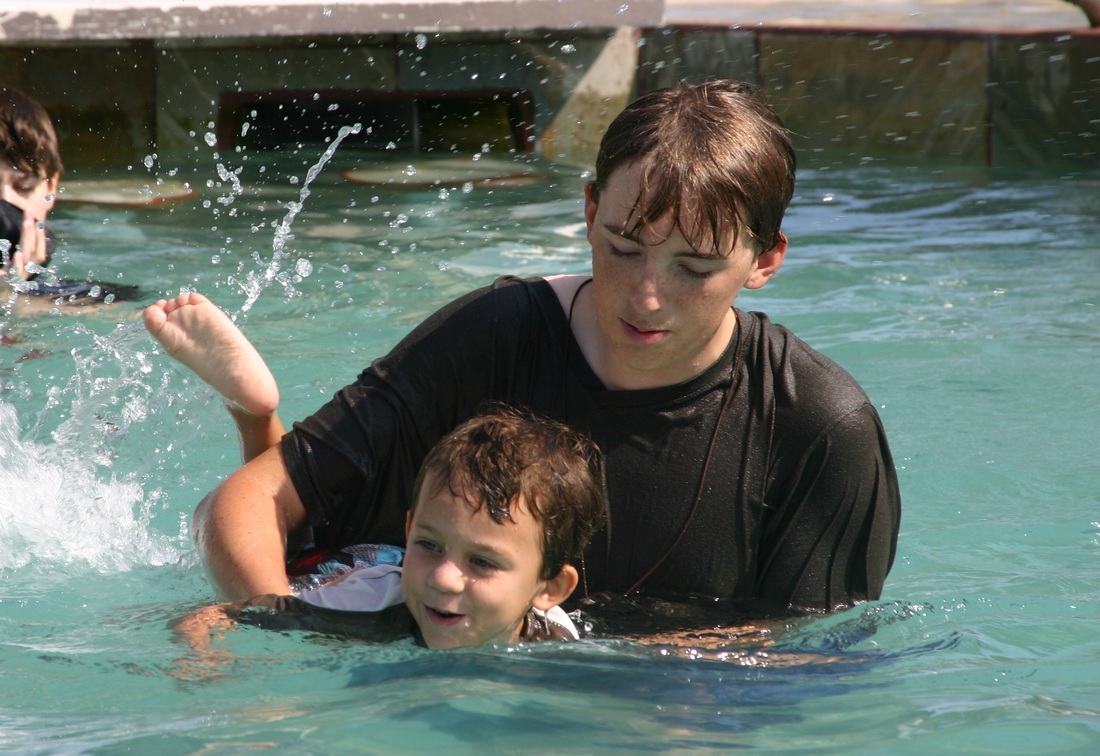             |
 LaurenHi, my name is Lauren. I've been living in Belize my entire life. I hope you enjoy reading about things all the things I like. BUTTERFLIES OF BELIZE!
Check out my current blog series on Butterflies of Belize. I have 72 butterflies to tell you about. COMING SOON!
I have a new blog series coming soon. IF YOU WOULD LIKE TO SPONSOR THIS SERIES WITH YOUR COMPANY'S ADVERTISEMENT, ...... Please let me know. Categories
All
Archives
May 2012
|











 RSS Feed