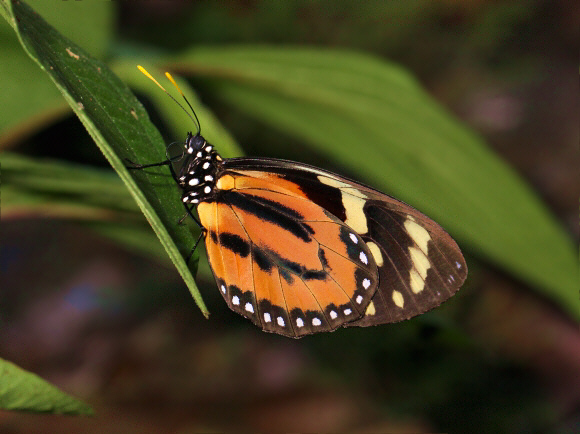
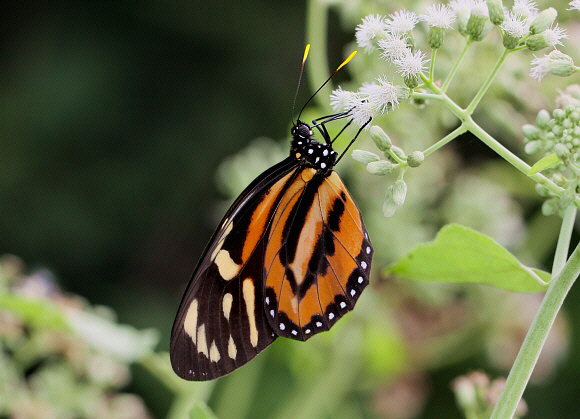
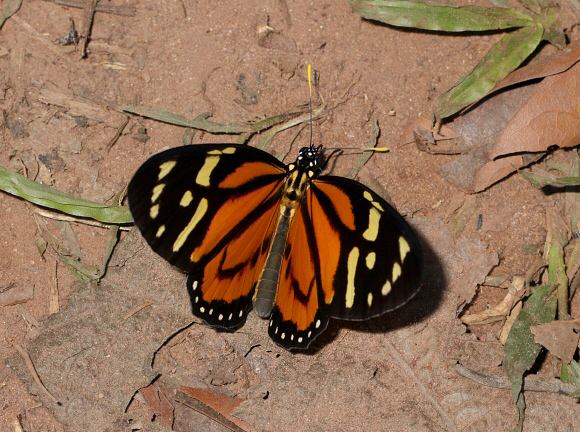
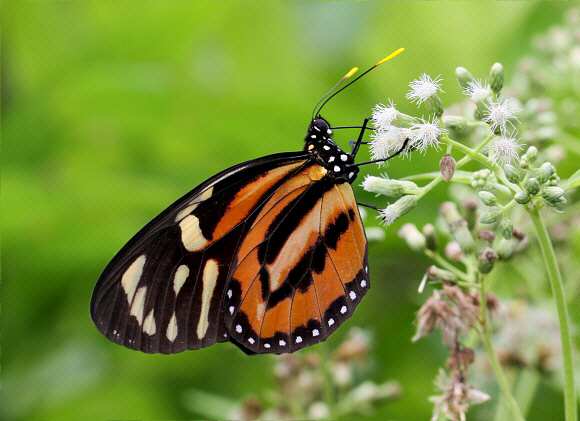
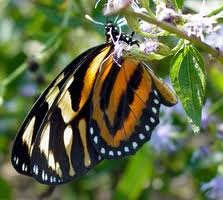
 LAUREN'S BUTTERFLIES OF BELIZE (Part Six) Is brought to you by ReMax Isla Bonita - everything we touch, turns to sold! 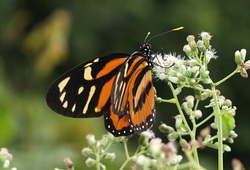 There are nine recognized subspecies of the tiger mimic butterfly. However, no matter what its wing pattern, coloration, or sex, a tiger mimic butterfly can be identified by a characteristic round spot on the upper side of its forewings (as seen in the picture tot he left). The tiger mimic is the most widespread and abundant butterfly species in Costa Rica (a neighboring country to Belize), where it can be observed flying on a regular basis in every city. It is considered a weak flier, therefore it tends to frequent wind-sheltered areas. The tiger mimic, which is sometimes called the sweet oil butterfly, is unpalatable and extremely toxic to vertebrate predators. During the larval stage, tiger mimics feed in groups on the leaves of nightshades (such as the potato, eggplant and other common nightshades), which are known for their toxic compounds. The larvae ingest and sequester the compounds that then serve as a defensive mechanism against vertebrate predators. However, predators such as the parasitic wasps, flies, or spiders, and predatory ants, are not detered by their toxic nature. With these toxic compounds, the Tiger mimic caterpillars demonstrate a sort of chemical camouflage that serves as a protection for them from other insects. Since the caterpillars are able to sequester lipids from nightshade leaves into their cuticles, the larvae become chemically indistinguishable from their hosts and the ants do not recognize them as prey. The tiger mimic butterfly and other representatives of the tiger-striped mimicry rings are popular with butterfly enthusiasts, because of their clear defensive strategy against predatory birds and lizards. Moreover, the slow wing beat of adult tiger mimics makes them easy to view and photograph and, therefore, the species is a favorite at butterfly gardens and conservatories. Unlike many Neotropical butterflies, which are at risk of extinction, the tiger mimic appears to not only be surviving, but also thriving.
1 Comment
Hi Lauren Leave a Reply. |
 LaurenHi, my name is Lauren. I've been living in Belize my entire life. I hope you enjoy reading about things all the things I like. BUTTERFLIES OF BELIZE!
Check out my current blog series on Butterflies of Belize. I have 72 butterflies to tell you about. COMING SOON!
I have a new blog series coming soon. IF YOU WOULD LIKE TO SPONSOR THIS SERIES WITH YOUR COMPANY'S ADVERTISEMENT, ...... Please let me know. Categories
All
Archives
May 2012
|
 RSS Feed